Find Concrete Wall Formwork for Hotels, Columns, and Cores
Source 27 concrete wall formwork options from verified Chinese suppliers. Buyers can compare steel and plastic materials, customizable sizes, and reusable cycles for hotel, column, and core tube applications.
Key considerations
Products List




Comprehensive Sourcing Guide
Strategic Sourcing Guide for Concrete Wall Formwork Systems
Navigating the global market for concrete wall formwork requires a disciplined approach that balances technical performance with supply chain reliability. Buyers entering this sector must distinguish between various formwork types, materials, and application scenarios to ensure project success. The following guide synthesizes observed market data and technical attributes to provide a structured framework for procurement decisions. This analysis focuses on the critical factors that define product viability, including material composition, certification status, dimensional specifications, and supplier capabilities.
Understanding Formwork Material Variations and Structural Integrity
The foundation of any successful concrete pouring operation lies in the selection of the appropriate formwork material. Market observations indicate a diverse range of materials available, primarily driven by the specific requirements of the construction project. Steel remains a dominant material choice, offering high durability and the capacity to withstand significant fresh concrete pressure. Products identified in the market often cite a capacity to handle fresh concrete pressure exceeding 60 kN/sqm, a critical metric for high-rise or heavy-load applications. In contrast, alternative solutions utilize ABS plastic or general plastic composites, which present different handling characteristics and weight profiles.
The weight of the formwork is a significant logistical factor. Observed data suggests that plastic-based wall formwork systems can weigh approximately 11 kg/sqm, while other plastic variants may reach around 15 kg/sqm. These lighter weights can facilitate faster manual handling and reduce crane dependency on site. However, steel-based systems, often constructed from 45# steel combined with plywood, offer a different set of advantages regarding rigidity and reusability. The choice between steel, plastic, and composite "Steel Wood" materials depends heavily on the project's repetition rate and the required surface finish. Buyers must verify the specific raw material composition of any supplier's offering, as the market includes options ranging from pure steel frames to mixed-material panels.
Technical Specifications and Dimensional Flexibility
Precision in dimensions is paramount for ensuring the structural integrity of the poured concrete and the efficiency of the assembly process. The market offers a wide spectrum of standard and customized dimensions. Observed specifications include thicknesses ranging from 18mm to 75mm, with specific product models adhering to a thickness of 75mm for certain heavy-duty applications. Length and width capabilities are equally variable, with some systems supporting lengths between 300mm and 3000mm and widths from 300mm to 2400mm. Other standardized models may feature a maximum size of 1200mm by 600mm, while custom widths can span from 100mm to 600mm and lengths from 900mm to 3000mm.
Customization is a prevalent feature in this sector, allowing buyers to tailor formwork to unique architectural designs. Suppliers frequently offer customized surface treatments, including paint spraying or specific color options such as black, blue, red, or yellow. The ability to customize the surface treatment is essential for projects requiring specific aesthetic finishes or color-coding for safety and identification purposes. Furthermore, the modular nature of these systems, often featuring panel frames and accessories like pins, ties, and hooks, allows for flexible assembly. Buyers should verify that the selected product model aligns with the specific geometric constraints of their project, ensuring that the available width and length ranges can cover the required wall surfaces without excessive cutting or waste.
Compliance, Certification, and Quality Assurance Standards
In the construction industry, compliance with international standards is non-negotiable. The market data highlights several key certifications that buyers should look for to ensure product reliability. Commonly observed certifications include CE and ISO marks, with specific references to ISO9001 for quality management systems. These certifications indicate that the manufacturer adheres to established quality control protocols and international safety standards. However, buyers must treat these as observations of the supplier's current status rather than a universal guarantee for every listed product. It is essential to request valid, up-to-date certification documents for the specific batch or model being purchased.
Beyond general certifications, specific performance metrics provide insight into the product's longevity and safety. Reusability is a critical performance indicator, with some plastic-based systems claiming a reuse life of more than 80 times, while other high-performance units are rated for up to 100 uses. This metric directly impacts the total cost of ownership and the environmental footprint of the project. Additionally, physical properties such as water absorption rates (observed between 0.12% and 0.25%) and contraction percentages (less than 0.4%) are vital for maintaining dimensional stability during the curing process. Buyers should verify that the supplier can provide test data or technical sheets confirming these values, as they directly influence the final quality of the concrete wall.
Cost Drivers and Economic Considerations in Procurement
The pricing of concrete wall formwork is influenced by a complex interplay of factors, including material costs, customization levels, and order volume. Observed market data indicates a broad price range, with unit costs varying from $5 to $1500 USD. This wide disparity reflects the difference between simple plastic panels and complex, heavy-duty steel systems with extensive customization. The Minimum Order Quantity (MOQ) is another significant economic driver, with observed ranges spanning from 10 to 1000 units. Buyers with smaller project needs may find the higher MOQs of large-scale suppliers prohibitive, necessitating a search for suppliers with more flexible ordering terms.
Packaging and logistics also contribute to the overall cost structure. Standard packaging is common, but options such as wooden pallets or palletized shipping are available to ensure safe transport. The weight of the product, ranging from 11 kg/sqm to 15 kg/sqm, directly impacts shipping costs, particularly for international procurement. Buyers should calculate the total landed cost, including freight, insurance, and potential customs duties, rather than focusing solely on the unit price. Additionally, the potential for customization, such as specific surface treatments or unique dimensions, will inevitably increase the base cost. It is advisable to obtain detailed quotations that break down material, manufacturing, and logistics costs to make an informed financial decision.
Supplier Evaluation and Project Support Capabilities
Selecting the right supplier involves more than just comparing product specifications; it requires assessing the supplier's overall capability to support the project lifecycle. Geographic origin is a key factor, with major production hubs identified in regions such as Jiangsu, Yancheng, and Shandong in China. These locations often indicate a mature supply chain and specialized manufacturing expertise. However, buyers should verify the specific place of origin for their order to ensure consistency in quality and to understand the logistical implications of the shipment.
A critical differentiator among suppliers is their project solution capacity. Leading manufacturers often provide comprehensive support services, including graphic design and 3D model design. These services are invaluable for complex projects where precise formwork layout and structural analysis are required before fabrication begins. Suppliers offering these capabilities can help identify potential design conflicts early, reducing the risk of on-site errors and delays. Furthermore, the availability of accessories such as pins, ties, and hooks is essential for a complete system. Buyers should confirm that the supplier can provide a full suite of compatible accessories to ensure a seamless assembly process.
Quality Control Protocols and Long-Term Procurement Strategy
Ensuring consistent quality throughout the procurement process requires a robust quality control strategy. Buyers should implement a verification process that includes checking the surface treatment, such as painting or paint spraying, for uniformity and durability. The standard of the product, whether labeled as "Standard" or "Customized," must be clearly defined in the purchase agreement. For long-term projects, the reusability of the formwork becomes a primary consideration. Systems rated for over 80 or 100 uses offer significant economic benefits by reducing the need for frequent replacements.
When establishing a long-term procurement relationship, buyers should prioritize suppliers who demonstrate a commitment to continuous improvement and adherence to standards. The ability to provide consistent product specifications, such as maintaining the 18mm or 75mm thickness tolerances, is crucial for maintaining project schedules. Additionally, the supplier's ability to handle custom orders with a turnaround time that meets project deadlines is a key performance indicator. Buyers should also consider the environmental impact of the materials used, noting the low water absorption and contraction rates of high-quality plastic systems, which contribute to more sustainable construction practices.
Application Scenarios and Market Versatility
Concrete wall formwork is utilized across a wide array of construction applications, ranging from residential hotels to large-scale infrastructure projects. The versatility of these systems allows them to be adapted for various structural elements, including columns, core tubes, and general wall structures. The specific application dictates the required material strength and dimensional flexibility. For instance, hotel construction may prioritize aesthetic finishes and rapid assembly, while core tube construction demands high pressure resistance and rigidity.
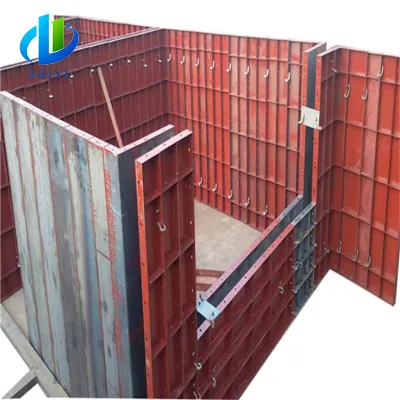
The market offers formwork solutions tailored to these diverse needs. Steel frame formwork and steel formwork systems are ideal for heavy-duty applications requiring high pressure resistance, while plastic and ABS plastic systems are well-suited for applications where weight reduction and ease of handling are priorities. The ability to customize the formwork for specific applications ensures that buyers can optimize their procurement strategy to match the unique demands of each project phase. By understanding the specific application requirements, buyers can select the most appropriate formwork system, ensuring both structural safety and operational efficiency.
Final Procurement Considerations and Verification Steps
As buyers finalize their procurement strategy, it is essential to conduct a thorough verification of all product attributes and supplier claims. The observed data provides a baseline for understanding the market, but individual product performance can vary. Buyers must request detailed technical data sheets, certification documents, and sample specifications before placing an order. Verifying the exact material composition, such as the use of 45# steel or specific plastic grades, is critical for ensuring the product meets the project's structural requirements.
Furthermore, buyers should clearly define the scope of customization, including surface treatments, colors, and dimensions, to avoid misunderstandings during the manufacturing process. The packaging method, whether standard or by pallet, should be agreed upon in advance to ensure safe delivery. Finally, establishing clear communication channels with the supplier for ongoing support and quality assurance will help mitigate risks and ensure a successful project outcome. By adhering to these verification steps and leveraging the available market data, buyers can make informed decisions that align with their project goals and budget constraints.
FAQs
What certifications do concrete wall formwork suppliers typically hold?
Suppliers typically hold CE and ISO certifications, with some offering ISO9001 quality management. These marks indicate adherence to international safety and quality protocols, though buyers must verify specific batch documentation rather than assuming universal coverage for all listed products.
Which materials are used for concrete wall formwork systems?
Common materials include steel, ABS plastic, and composite Steel Wood combinations. Steel systems often use 45# steel with plywood, while plastic variants offer lighter weights around 11 to 15 kg per square meter, suitable for different handling and durability requirements.
How customizable are concrete wall formwork dimensions and surfaces?
Customization is widely available for dimensions, surface treatments, and colors like black, blue, or red. Buyers can request specific lengths between 300 and 3000mm, widths from 300 to 2400mm, and tailored surface finishes such as paint spraying to meet unique project needs.
What is the typical reuse life of concrete wall formwork?
Reuse life varies by material, with some plastic systems lasting more than 80 times and others rated for up to 100 uses. This metric impacts long-term costs, so buyers should verify specific durability claims and physical properties like water absorption rates for their selected model.
Can buyers find formwork suppliers in specific Chinese regions?
Yes, major production hubs are located in Jiangsu, Yancheng, and Shandong provinces. Buyers should verify the specific place of origin for their order to ensure consistency in quality and to understand the logistical implications of shipping from these established manufacturing centers.
What is the price range for concrete wall formwork products?
Unit costs range widely from 5 to 1500 USD depending on material and customization levels. This disparity reflects differences between simple plastic panels and complex steel systems, so buyers should calculate total landed costs including freight and potential customs duties.